 Cardmigo
Wikipedia card rarity and drop rates: what’s the difference?
A famous person becomes a common card. An unfamiliar subject has a legendary border. Different games can give the same subject different labels. Here is how to read the rules behind them.
Start with two separate questions
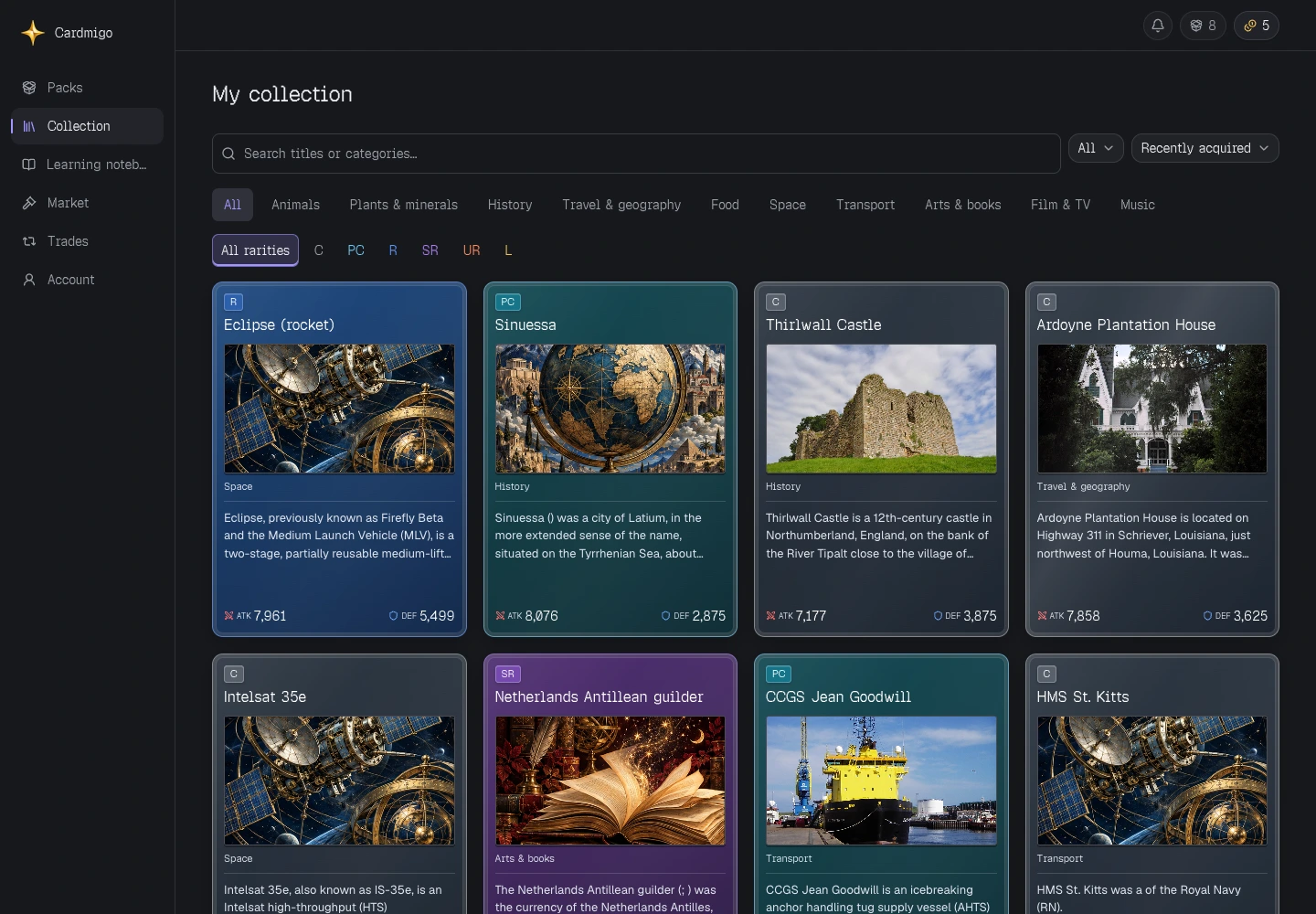
A rarity label tells you something about a game’s classification system. It does not, by itself, tell you the chance of opening that card. When a game calls a card rare, ask two questions.
- Why is this subject in that tier? A game might use article readership, a quality measure or another classification rule.
- How does the pack select cards? It might choose a rarity first, use different rules for each slot or include a guaranteed minimum tier.
Imagine a catalogue with 10,000 eligible subjects, 100 labelled Legendary. Legendary subjects make up 1% of the catalogue. That does not establish a 1% drop rate: the game could give those subjects a different combined weight when drawing a pack.
This is a hypothetical example, not the catalogue or odds of Cardmigo or any other game.
Article popularity needs a time window
Some games use Wikipedia readership to classify cards. Even then, “based on views” leaves questions unanswered. Are the views from one month or a whole year? Does the game compare every article together, or compare articles within separate themes? Does an existing copy keep its rarity?
A subject that attracts attention during one news cycle can look different when measured over a longer period. A niche subject can also stand in a different position within its own theme.
WikiDeck’s guide describes editions using the previous year’s readership and classifying subjects within their universes. WikiCollector’s pack guide describes a measured-month approach. Read each label within its own system.
Before comparing cards across games, look for the measurement period, the classification rule and whether existing copies change later.
A shiny finish can be a separate draw
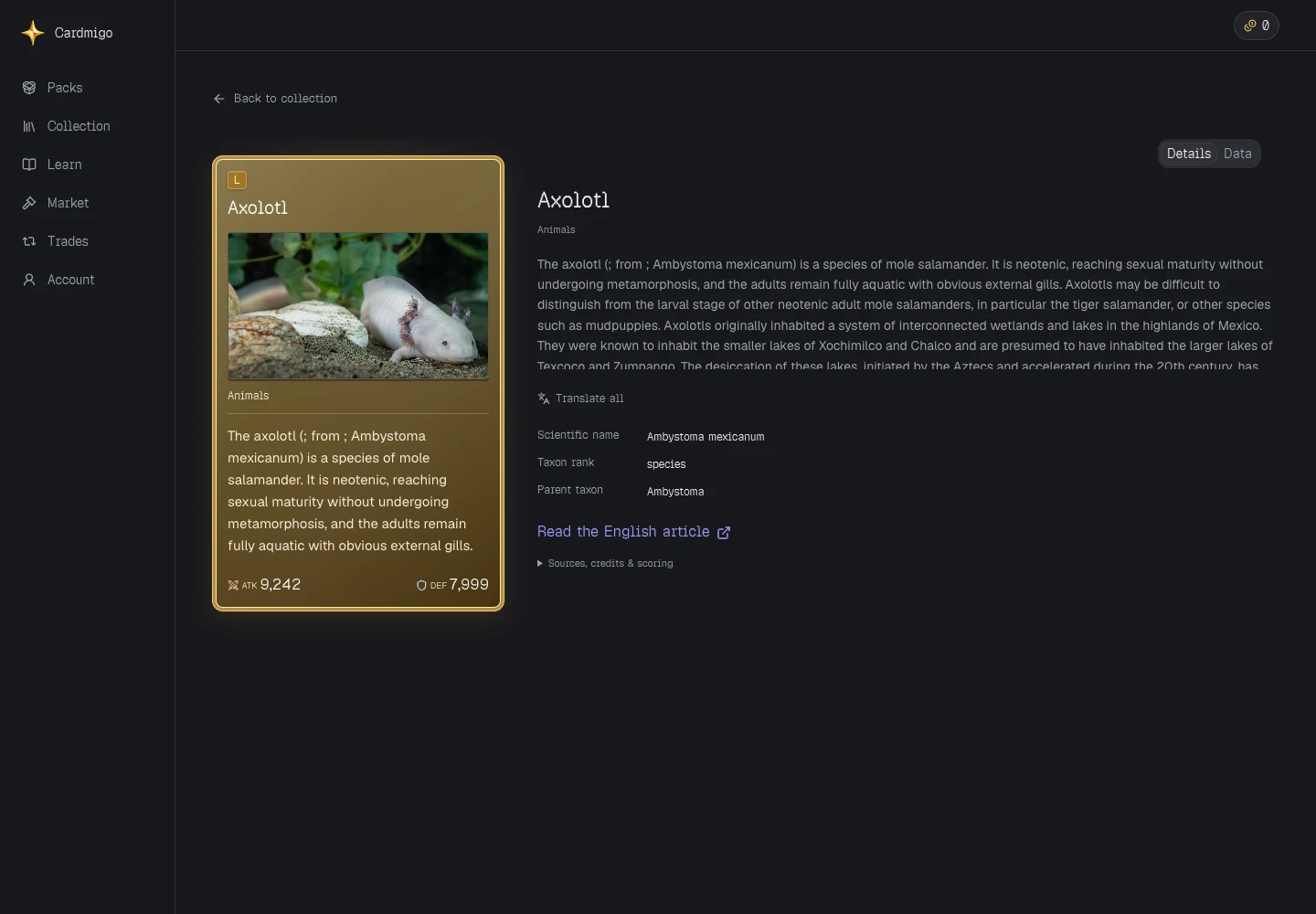
The border and the finish may represent different things. A rarity tier might classify the subject, while a holographic or prismatic finish describes one particular copy. A common subject can therefore appear with an unusual finish.
WikiDeck explicitly separates rarity from finish. Other products can organise their variants differently. Check the game’s rules before assuming that a shiny card belongs to its highest tier.
Decide what you want to collect: particular subjects, higher tiers, special finishes or a combination. Each creates a different goal.
Per-card odds and per-pack odds are different
Suppose a hypothetical pack contains five cards. Each card independently has a 1% chance of belonging to the tier you want, with no guarantees or changing odds. The chance of finding at least one is:
1 − (1 − 0.01)5 ≈ 4.90%
First calculate the chance that all five cards miss, then subtract it from 100%. The independence assumption matters: this formula does not apply unchanged if the last slot has different odds, duplicates are restricted or a guarantee changes the draw.
It also describes a tier, not the chance of finding one named card within it. This is an explanation, not published odds for any product here. It does not mean a result becomes guaranteed after a certain number of packs.
Read what a free pack actually includes
Two games can both offer free packs while giving you different experiences. Check how many cards are inside, how packs become available, how many can wait in reserve and whether you need an account to keep the results. A welcome gift and a recurring free pack are different offers.
Separate a sample animation from a real collection, too. Seeing example cards does not necessarily mean those cards have been assigned to you.
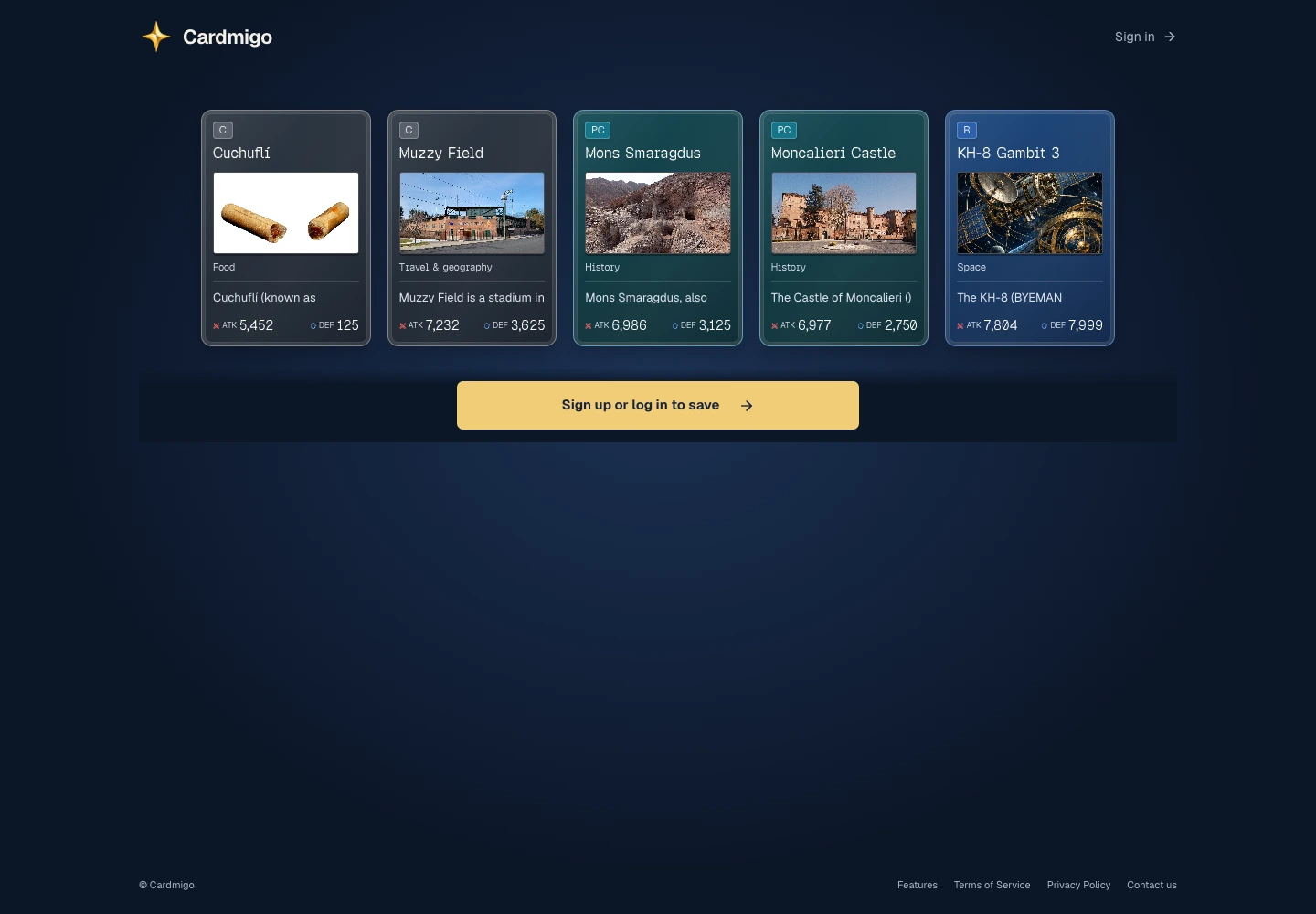
On Cardmigo’s free-pack page, the welcome experience is explicit: preview five cards in the browser, then sign in to keep that reserved pack. There is one welcome gift per account; regular packs follow the in-app rules. This is not an unlimited free-pack offer.
Choose the collection you want to build
You might want to complete a theme, play quiz battles, exchange duplicates or follow an unfamiliar subject into its encyclopedia article. A product designed around that activity may suit you better than another with a more generous-looking timer.
Start with a subject you care about. Inspect a card, read its source and try an available preview. Check how progress is saved before spending time building a collection.
If the story behind a card interests you, browse Cardmigo’s unusual animals or space discoveries. These theme pages do not promise that a random pack contains only those subjects. Our reading and vocabulary tools can help you follow an English passage further.
We make Cardmigo. This guide explains how to compare rules; it is not a ranking of games or a promise about the value of a card.
Sources & further reading
Written by Cardmigo. Product rules can change; check the linked official pages for current details.
Your next discovery
Begin with five discoveries, then follow the subject that makes you curious.
Preview your welcome pack